Emily Heist Moss wants to do away with the extra-special, gender-specific insult that women sometimes get handed to them.
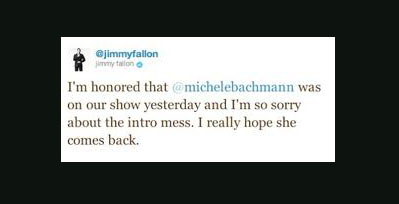
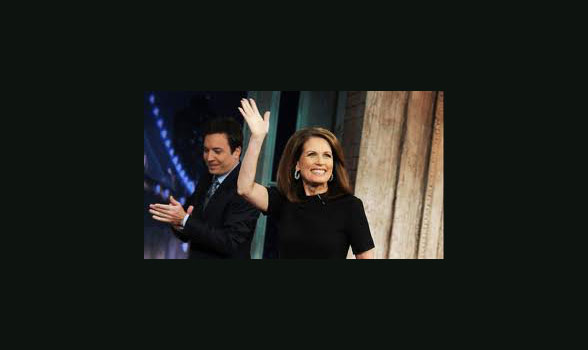
Earlier this week, on Jimmy Fallon’s late night show, in-house band The Roots had a little surprise for guest Congresswoman Michelle Bachmann. As she walked onstage, the band accompanied her intro with Fishbone’s “Lyin’ Ass Bitch.” They left out all the words except “la la la”, but the message was very clear. For non-Fishbone fans, The Roots front man, Questlove, even gave his followers a Twitter hint about the musical choice prior to the show, “This next one takes the cake. Ask around cause I ain’t tweeting title.”
No one disagrees with Michelle Bachmann’s politics more than I do. Her brand of conservatism isn’t rooted in pragmatism or political ideals but in bigotry, religious fundamentalism, and willful ignorance. Should she get elected, I’m convinced her administration will attempt to implement programs that will set women back, further ostracize the LGBT community, and place a premium on faith-based policies instead of science. I’m not a fan, to say the least. You don’t have to work very hard to convince me she’s a liar, but I’m drawing the line at calling her a “lyin’ ass bitch” on national television.
The word “bitch” is one of those words that some feminists hate, and others try to reclaim. The difference between “bitch” and “asshole” comes down to gender, and that’s where it gets problematic. When men describe women as a “bitch,” the word carries all this extra baggage that “asshole,” “dick,” or “jerk” doesn’t have. A bitch is a woman who is doing something you don’t like; she’s uppity, power-hungry, or manipulative. In my opinion, Michelle Bachmann is all those things, but not because she’s a woman. Politicians, as a group, are power-hungry. By definition, when you run for office, it’s because you think that of all the people, you’re the one who should lead. There’s a certain arrogance that is required. And politicians, as a group, are manipulative. I wish we didn’t live in a culture where the twisting of words and the mis-identification of quotes constituted campaigning, but we do, and that’s not unique to Bachmann.
Why do we need an extra-special insult for women who are behaving badly? What’s wrong with “asshole?” You would never call a male politician who you disliked a “bitch.” You might say he’s a schemer, or a scuzzball, or a moron. Fine, but you would never say “bitch,” because that one we reserve for the ladies.
Democratic Representative Nita Lowey says it best, “I do not share Michele Bachmann’s politics, but she deserves to be treated with respect. No female politician—and no woman—should be subjected to sexist and offensive innuendo like she.”