


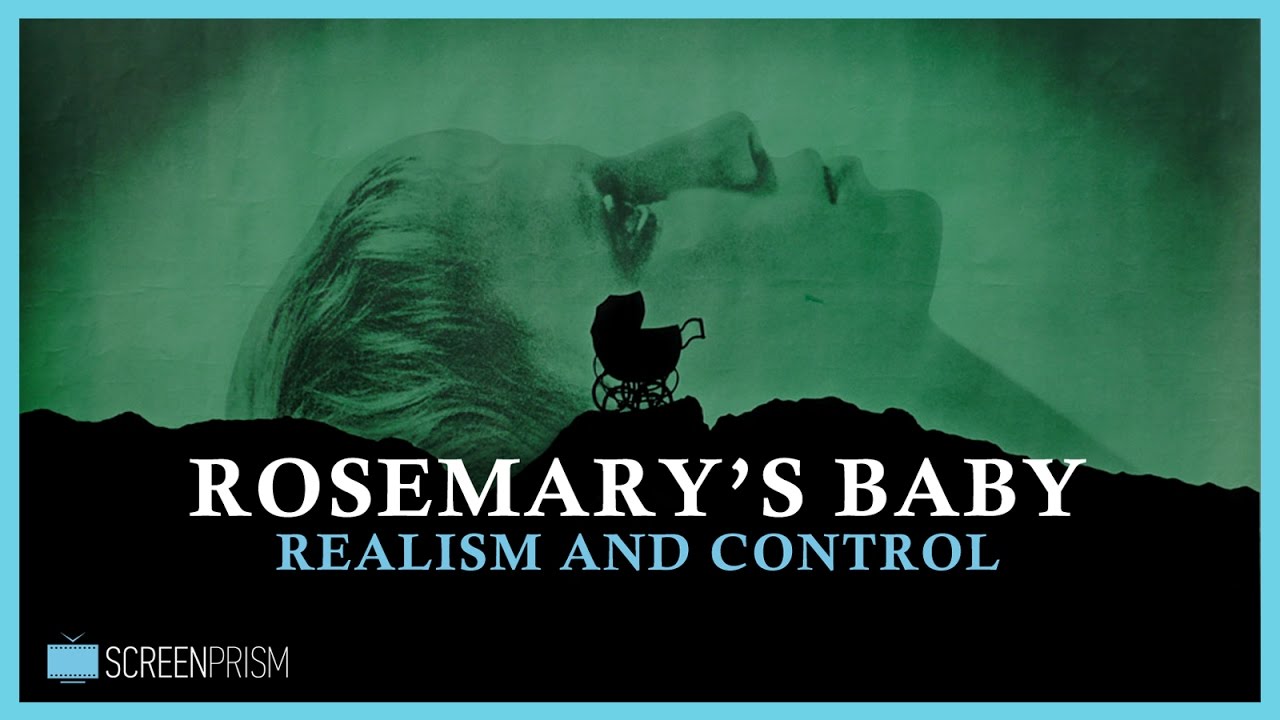
The horror of Rosemary’s Baby explores close-to-home realities like the loss of control.
.
.
Transcript provided by Youtube:
00:06
Rosemary’s Baby is a masterful example
00:09
of horror realism director Roman
00:11
Polanski’s realism is expressed both in
00:14
how he visually tells the story and in
00:16
what the story’s about it taps into our
00:18
real fears about urban living religion
00:21
the female body pregnancy and most of
00:24
all loss of control the 1968 film set
00:28
the tone for other horror realist
00:30
classics to follow The Exorcist and The
00:33
Omen today’s average horror movie
00:35
revolves around special effects and gory
00:37
shocks but the horror realism of
00:39
Rosemary’s Baby relies on a slow build
00:42
of tension precise character portrayals
00:44
long camera takes embedded social
00:46
commentary and masterful use of point of
00:49
view to represent psychological States
00:51
as we watch Mia Farrow’s young Manhattan
00:54
night housewife rosemary discover that
00:56
she’s given birth to the spawn of Satan
00:57
our terror results not just from
01:00
believing what we’re watching but also
01:02
from believing it could happen to us
01:05
what have you done to his eyes I saw
01:08
this showing the baby would be a great
01:12
mistake this show
01:16
that there is a subliminal moment when
01:19
she remembers the eyes she saw in her
01:23
dream but other than that the film is
01:26
totally realistic there’s nothing
01:30
supernatural and everything that
01:32
occurred could have happened in real
01:35
life
01:36
Polanski style executed by
01:39
cinematographer William Frey Kerr
01:40
creates the realistic atmosphere through
01:43
long takes but don’t call attention to
01:44
themselves this uncut camerawork makes
01:47
us feel that reality continues outside
01:50
of the frame this style represents meson
01:53
son filmmaking where the camera creates
01:54
meaning by moving through space as
01:56
opposed to montage style filmmaking
01:58
which creates meaning through cuts these
02:00
long takes also absorb us in Rosemary’s
02:03
point of view we’re always grounded in
02:05
Rosemary’s eyes never allowed to see
02:07
beyond what she does like her we’re
02:09
piecing together clues and kept in the
02:11
dark when we’re not looking through
02:13
Rosemary’s eyes we’re looking at her the
02:15
frequent close-ups of her face keep us
02:18
in tune with what she’s seeing and
02:19
feeling Rosemary’s Baby is a story about
02:22
control through his fluid camera and
02:25
disciplined focus on Rosemary’s point of
02:27
view Pulaski makes us emotionally
02:29
understand that rosemary is not in
02:32
control and by extension neither are we
02:34
lack of control weaves together the real
02:37
horror of every aspect of Rosemary’s
02:39
situation from the way her husband talks
02:41
to her to the systematic way she’s
02:43
denied important information about her
02:45
body to not being able to keep neighbors
02:47
out of her own space in her constrained
02:49
existence as the traditional housewife
02:51
rosemary is treated dismissively like a
02:54
child she’s constantly tolerating what
02:56
she doesn’t like for a modern viewer
02:58
it’s hard not to get a little frustrated
03:01
with rosemary because stop drinking that
03:03
stupid drink woman mini castevets is
03:05
clearly giving you devil herbs and why
03:08
are you wearing the gross smelling
03:09
necklace when you hate it and you know
03:11
that suicidal woman was wearing it when
03:13
she jumped out of the window all of
03:15
Rosemary’s in
03:15
things are telling her no but she
03:17
continues to acquiesce Rosemary’s
03:19
submissive attitude reflects the very
03:21
real power of the patriarchy both then
03:24
and now look at the way her husband guy
03:27
feels he’s allowed to bully her and
03:28
attack her character for not liking a
03:30
dessert to explain her deep scratches
03:33
from the satanic ritual guys shockingly
03:35
claims he had rough sex with rosemary
03:38
while she was passed out as if sexual
03:40
violence and rape are condoned as long
03:43
as it’s your husband dr. Saperstein
03:50
keeps telling her not to read books as
03:53
if this would be a ridiculous thing for
03:55
a woman to do anymore and I also takes
04:01
away Rosemary’s book when she’s getting
04:03
too close to the truth an action that
04:05
alludes to the age-old practice of
04:07
disempowering women by depriving them of
04:09
education also note that he places the
04:12
forbidden book on top of treatises about
04:14
male and female sexual behavior
04:16
underlining the film’s focus on how male
04:18
society coops female sexuality and the
04:21
pregnant female body even dr. hill who’s
04:24
not one of the Satanists responds to
04:26
Rosemary’s despairing plea for health by
04:28
of course calling the very husband and
04:30
male doctor who’ve driven her to a state
04:33
of terror notably we can read this film
04:35
in very different ways so we can read
04:38
rosemary struggle to reclaim her own
04:40
body as a feminist critique of the
04:42
patriarchy and a defense of the pill or
04:45
the need for abortion in cases of
04:47
dangerous pregnancy but we can also
04:49
interpret the film as the opposite a
04:51
defense of conservative family values
04:53
based on Rosemary’s final inability to
04:56
reject her baby
04:57
despite the harrowing circumstances of
04:59
her impregnation likewise Rosemary’s
05:02
physical transformation also supports
05:04
opposing interpretations at the start
05:06
like her childish lullaby over the
05:09
opening credits
05:10
Rosemary’s girlish pigtails and yellow
05:12
dresses make her appear as a little girl
05:14
she’s innocent even babyish during her
05:17
pregnancy rosemary is increasingly de
05:19
feminized with a fading complexion and a
05:22
boyish haircut on one level if we read
05:25
her drained masculine appearance as
05:26
signs
05:27
the evil within her the movie could be
05:29
equated health with traditional
05:31
femininity and suggesting Rosemary’s
05:33
unwomanly looks are inherently sinister
05:36
or the change could also be subversive
05:39
li+
05:40
I think Vidal Sassoon it’s it’s very in
05:44
her radical fashion forward new look
05:46
could represent her painful awakening as
05:49
she becomes an adult with her eyes open
05:51
her babyish passivity departs with her
05:54
lost girlish appearance that would
05:56
explain why her domineering husband
05:58
hates the new haircut you look great
06:01
it’s that haircut that looks awful it’s
06:04
a testament to the complex writing
06:06
adapted faithfully from Ira Levin’s
06:08
novel that the film holds up to varied
06:10
interpretations we see what we want to
06:12
see because more than sending a
06:14
definitive political message the film’s
06:16
aim is to dramatize our deepest fears
06:18
involving sexuality and the female body
06:21
if you’re a woman this movie may make
06:23
you terrify to ever let a man near you
06:25
again let alone get pregnant Rosemary’s
06:28
pain exaggerates the way in which any
06:30
pregnancy is on the literal level an
06:32
invasion by a foreign entity and most
06:35
fundamentally this movie dramatizes the
06:37
most basic fear of every pregnant woman
06:39
that something is wrong whether
06:42
Rosemary’s Baby is radically feminist
06:44
misogynistic or a little bit of both it
06:46
undeniably captures the terror of being
06:49
robbed of power over one’s own body the
06:52
story captures another underlying real
06:54
fear in its portrayal of dense city
06:56
living and the stress of existing and
06:58
close intimacy with so many strangers
07:01
Rosemary’s urban paranoia is embodied in
07:04
the grotesque appearances of her
07:06
intrusive neighbors the castevets
07:07
Polanski exaggerates the urban
07:10
irritations of overcrowding noise lack
07:12
of privacy and annoying neighbors in an
07:15
extreme over-the-top sensory depiction
07:17
of the strains of city living equally
07:20
real is the portrait of city ambition
07:23
and the ugly human habit of forgoing our
07:25
morality and ideals while trying to get
07:27
ahead
07:28
Rosemary’s Fame obsessed self-absorbed
07:30
husband guy played by John Cassavetes
07:32
evidently doesn’t think twice before
07:34
offering his wife’s body to the
07:36
Satanists in exchange for getting acting
07:38
roles as we see here he takes
07:40
to roman castevet in their very first
07:42
meeting I’m gonna go over there again
07:44
tomorrow night and Rosemary’s desires
07:49
also make her complicit she lets her
07:51
longing for a baby and a big lovely
07:53
apartment blind her to what her husband
07:56
really is meanwhile the film’s
07:58
over-the-top satanic elements are
08:00
balanced with a realist portrait of how
08:02
religious ideas and guilt can shape our
08:05
behavior the film arguably links
08:07
Rosemary’s Catholic upbringing which Mia
08:09
Farrow also shared to Rosemary’s lack of
08:12
assertiveness in the dream sequence she
08:19
asks for forgiveness from the Pope while
08:21
being raped by Satan she resists
08:23
rejecting her terrible doctor partially
08:25
it seems because she’s afraid a better
08:27
doctor might tell her she needs an
08:28
abortion rosemary is increasingly shown
08:33
in the traditional colours of the Virgin
08:35
Mary
08:35
blue and white representing loyalty and
08:37
purity yet again the Mary imagery
08:40
underlines her passivity and
08:41
submissiveness she’s deferring to
08:43
greater powers without question the fear
08:45
of one’s body being invaded impregnated
08:48
by the most evil spirit mirrors a
08:51
Catholic girls fear of doing wrong again
08:53
hear the story exaggerated a common fear
08:56
in light of our closeness to Rosemary’s
08:58
point of view and her subconscious we
09:00
have to acknowledge that rosemary could
09:02
be an unreliable narrator the idea of
09:05
devil could be conceived as the
09:09
Rosemary’s folly
09:12
would have been all question of her
09:15
paranoia suspicions during the pregnancy
09:19
and postpartum craze as Polanski
09:25
suggests the realism of the story
09:27
doesn’t hinge on whether the devil has
09:30
actually impregnated rosemary it lies in
09:32
the story’s eerie relevance to our lives
09:35
the realistic fear of Rosemary’s Baby
09:37
becomes even more terrifying in light of
09:40
the real-life tragedies that followed a
09:42
year after the movies 1968 release
09:44
Polanski’s pregnant wife Sharon Tate and
09:47
her unborn child were murdered by
09:49
Charles Manson cult followers and in
09:51
1980 John Lennon was killed outside the
09:54
Dakota building the film’s shooting
09:56
location for the eccentric Bramford in
09:58
another eerie connection the Manson
10:00
murderers also took inspiration from the
10:02
Beatles helter skelter these strange yet
10:05
true events reinforced that if the
10:07
concept of having the devil’s baby
10:08
sounds far-fetched the realized film is
10:11
all too familiar
10:12
along with rosemary we’re trapped and
10:14
controlled held captive in an apartment
10:17
a society and a body which turn on her
10:20
and take away her power to decide her
10:22
life we feel her pain
10:42
you
—
This post was previously published on Youtube.
—
***
If you believe in the work we are doing here at The Good Men Project and want to join our calls on a regular basis, please join us as a Premium Member, today.
All Premium Members get to view The Good Men Project with NO ADS.
Need more info? A complete list of benefits is here.
Talk to you soon.
—
Photo credit: Screenshot from video


.