


—
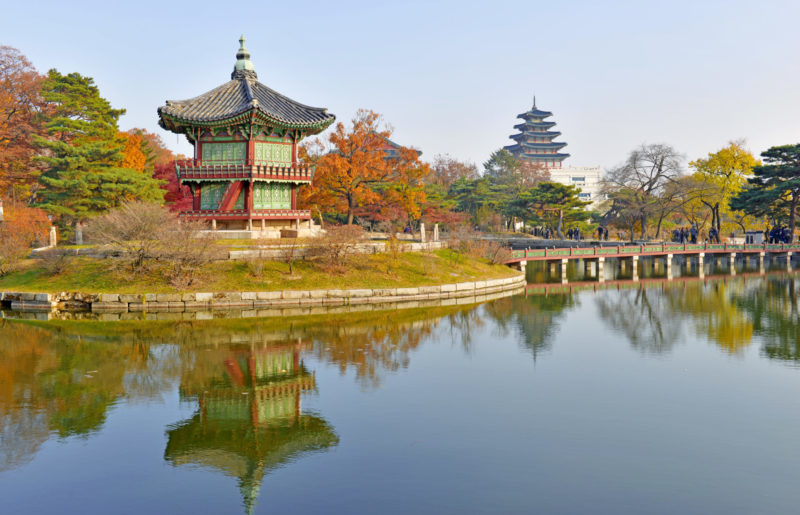
“Soul” not “See-ool”, almost every Korean has at least once explained this to somebody. The word soul even describes the position of the country appropriately, a land unique from the rest of the world but yet in the heart of it (don’t think North Korea). A perfect amalgamation of modernity and tradition.
A country that doesn’t get tired. A culture so vast that an outsider may never be able to grasp even one half of it. A 4300 years old civilization which has kept its ancient pillars so strong that even the storm of modern technology couldn’t shake it.
What is the first thing that comes to the mind of a non-Korean when he hears the word Korea? K-Pop, K-Drama, the octopus eating scene from Oldboy.
Korea has always been attractive to outsiders. Think how Gangnam district became known all over the world after Psy’s Gangnam Style. Its rich heritage & evocative food has enticed millions from every part of the world each year. But is there still more potential left? The belligerent nature of the DPRK aka North Korea has impacted a lot of things in the region. But the answer can not be no.
Chung Jae-suk, the president of the Cultural Heritage Administration (or CHA) sees a global potential in the Korean heritage and its traditions. He not only believes in the preservation of Korea’s old heritage but also realizes the immense need to promote it.
Korea has always been at the forefront of technology in the world. The country which is home to Samsung, the world’s largest smartphone manufacturer, boasts about its thriving economy due to the technology giant.
It should come as no surprise that CHA has spent heavily in this field to fulfill its ambitious dreams of reaching non-Koreans with even a slight interest in the Korean culture. It is using technologies like Augmented Reality & Virtual Reality while leveraging platforms like Youtube and Instagram where Generation Y & Generation Z are very active, the age group which CHA would like to target.
CHA is also working on the restoration of cultural centers in Southeast Asian countries and on the promotion of tourism in Korea, both of which have been affected by the ongoing covid19 pandemic. The efforts to list the Demilitarized Zone as a cultural zone in UNESCO’s list also look futile now due to increased tensions with North Korea.
In Korea, there is a custom to celebrate a child’s first anniversary with great pomp and show. Historical reasons being that often newborn babies died before reaching the age of one due to unknown illnesses and hence when they did get a year old, it was considered a good sign that the child would go on to live.
This first birthday celebration is termed as Doljanchi in Korean. Dol referring to the passage of 365 days. Babies are dressed in beautiful clothes called Hanbok. The spirit of the mountain Sanshin and the goddess of birth Samshin are thanked. The most important event of the day is a fortune-telling game called Doljabi, in which objects referring to certain occupations or precognitions are kept in front of the one-year-old.
The child out of curiosity picks up an object and with this his fate is decided. If the child picks up the paintbrush, he may become an intelligent person. If he picks up money, he may end up very rich. Picking up strings would mean a long life. Traditional dishes such as the bibimbap rice is served to the Gods. Miyeok guk, a kind of seaweed soup is served every birthday of the child from this day as a reminder to the baby of the hardships the mother went through in bearing him.
This old custom has seen many changes in the new world. The event now happens in restaurants where games are played amongst the guests and the host. Gifts are given to the kid. Doljabi is carried out with a twist now. Guests bet on what object the kid might pick and the winners get prizes. Even candles are blown, a practice of the west. Is this modernization of an ancient custom wrong?
Not at all. Korea is nothing, if progress is removed from its history. In the 21st century, a lot of things have changed. Parents don’t have the time to go shop for Doljanchi now. Instead, they prefer a Korean online shop to buy the Hanbok or the Doljabi set. Changes can be social too. Han Kang shouldn’t have to be disgraced for not eating meat anymore. Superstitions which often go side by side of customs and traditions shouldn’t exist now. Electric Fans shouldn’t kill now and the number Four shouldn’t be unlucky anymore. Modernization demands change and if Korea has to keep standing on its strong pillars which have lasted more than four millenniums since the time of Dangun, it will have to balance its traditions with modernization.
—
This content is brought to you by Nicholas Cho.
Photo: Shutterstock


.