


If we don’t talk about race, Sarah Jackson argues, we can’t get to any place progressive.
Originally published on Role/Reboot
—
RSVP for #StopRacism Weekly Calls
—
Recently Steve Locke wrote an incredibly on-point and heartfelt piece for The Good Men Project about why he was tired of talking about race. Locke, a talented artist and art professor, explained that “as a black person, I am called on often to speak for my ‘race.’ I can never give an opinion without it being assumed to be that of a multitude.” At the same time Locke details the hypocrisy that often evolves when he engages others in conversations about the continuing impact of racism in American society and is dismissed, attacked, or accused of being incapable of being objective. Locke notes that anyone genuinely committed to learning about race and how race has and continues to shape our country and everyday lives has “libraries full of books, interviews, essays, lectures, and symposia” to draw from, but that he, for one, is tired.
 Steve, I feel you man, I really do. Talking about race is exhausting, especially in a world that pretends it’s a conversation that no longer needs to be had, especially when faced with an already hostile audience because of the color of your skin, and especially because, as you point out, “whenever white people want to talk about race, they never want to talk about themselves.” Which is, of course, why we all need to keep talking about race.
And let me be clear about whom I mean by “we.” I mean you. Whoever you are, whatever your identity, you should talk about race.
♦◊♦
As an educator who researches and teaches about issues of social identity I find myself talking about race almost every day. That’s what I signed up for. But the thing is, even if it wasn’t my job to talk about race I still live in a raced world where race is talked about around me and to me, whether I like it or not. And that is not only because I am a person of color. Certainly, the color of my skin, like the fact that I was born with a vagina, influences the way the world perceives and treats me, but that same world perceives and treats EVERYONE in certain ways because of the color of their skin. Just as men’s everyday experiences are affected by constructions of gender and heterosexuals benefit from constructions of normative sexuality, white people live in a raced world, too. We are all surrounded by implicit (and explicit) race talk. I, for one, want my voice and the voices of others who want progress, to be a part of the conversation.
One of the tenets of feminism is that the lived, everyday experiences of women matter and should be considered equally valuable to those of men if we are to move toward a gender equitable society. We encourage women who have been the victims of gendered violence to tell their stories in order to de-stigmatize this experience. We call out department stores that sell shirts that tell our daughters if they are pretty they don’t have to do homework. We ask that our female politicians be judged equally to their male counterparts and not on what they’re wearing. We say aloud and repeat the fact that women continuing to make less money than men for the same work is the result of institutionalized sexism. We understand that constructions of gender are everywhere, even when not spoken about explicitly. Those of us invested in gender equality do all these things because talking about gender, naming it, and questioning it, can be empowering. The more we talk, the more we redefine the gendered social constructions that hurt us all. I’m sure you see where I’m going here.
Locke’s desire not to talk about race reminded me of an experiment conducted last year by John L. Jackson, Jr. (no relation) of the University of Pennsylvania’s Annenberg School for Communication. Jackson attempted a 40-day fast from talking about race. In an interview with NPR he explained that from day one this fast turned out to be impossible. “Race is around every corner, so I had to excuse myself from every conversation. I couldn’t read any headline because it is there already,” he said. “The experiment proved that if you’re not talking about race at all you’re not actually talking about the contemporary moment in a way that’s going to get us to someplace progressive.”
Exactly. So let’s talk about race.
♦◊♦
Contrary to the naive (and destructive) idea that we should live in a “colorblind” society where simply avoiding race as a topic makes it go away, talking about race, identifying its continuing impact on individuals and our society at large, allows us to move toward addressing continuing inequalities and validating a diverse set of experiences.
|
Contrary to the naive (and destructive) idea that we should live in a “colorblind” society where simply avoiding race as a topic makes it go away, talking about race, identifying its continuing impact on individuals and our society at large, allows us to move toward addressing continuing inequalities and validating a diverse set of experiences.
|
And let me again be clear, I do not mean that only people of color should talk about race. In fact, I agree with Steve Locke that people of color face the unfair burden of being expected to talk about race, even when they don’t want to or don’t, frankly, know much about it in an intellectual sense. I have seen this in my classroom when white students fall silent on issues of race and look to their black and brown classmates to address complex racial issues single-handedly. It’s as if my white students think that despite their peers sharing their age and educational level, the extra melanin in their skin has imbued them with the wisdom of Martin Luther King, the tenacity of Cesear Chavez, and the patience of Ghandi. I promise you, it has not. Similarly, like Locke, I have experienced the sting of being told I’m being “too sensitive” or “unobjective” about race many times, because of, yep, my race. Which is exactly why I want everyone to talk about race.
As Locke points out, as long as only people of color are asked to speak on race and then dismissed for doing so, white people maintain the privilege of not having to recognize the way race affects their everyday lives. Just as we need “good men” who are willing to talk about how being a man uniquely privileges them and how dominant constructions of masculinity hurt them, men who are willing to speak up against rape culture on college campuses and homophobia in the military, we need white folks to have open, public conversations about how their whiteness affects their everyday lives and to speak up against individuals, policies, and institutions that perpetuate racial hierarchies by refusing to talk about race. Silence isn’t only consent; silence is like giving a system based in racial hierarchies a bear hug and cooking it a romantic dinner.
I plan to keep talking about race, just like I plan to keep talking about sexism, homophobia, and classism. I talk about race because I don’t know how not to and because I wish desperately that others couldn’t help themselves either.
—
RSVP for #StopRacism Weekly Calls
—
Note: Steve Locke already provided a valuable reading list with his discussion, in that spirit I would add:
White Women Race Matters, Ruth Frankenberg
The Possessive Investment in Whiteness, George Lipsitz
White Like Me, Tim Wise
Black Feminist Thought, Patricia Hill Collins
Seeing a Colorblind Future, Patricia Williams
♦◊♦
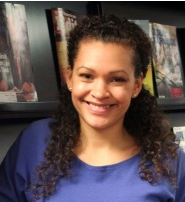 Sarah Jackson is a Postdoctoral Teaching Fellow at Northeastern University in Boston, MA. Her research and teaching focus on how media discourses of race, class, and gender reinforce and/or challenge concepts of national belonging. Outside her academic life, Sarah volunteers with youth in educational equity programs, does a lot of yoga, and fantasizes about being an artist. Read more of her writing on Wandering In Love and follow her on Twitter @sjjphd
—
This article originally appeared on Role/Reboot and is reprinted with permission.
—
We are proud of our SOCIAL INTEREST GROUPS—WEEKLY PHONE CALLS to help discuss and help solve some of the most difficult challenges the world has today. Calls are for Members Only (although you can join the first call for free). Not yet a member of The Good Men Project? Join now!
—
What Now? Participate. Take Action. Join The Good Men Project Community.
The $50 Platinum Level is an ALL-ACCESS PASS—join as many groups and classes as you want for the entire year. The $25 Gold Level gives you access to any ONE Social Interest Group and ONE Class–and other benefits listed below the form. Or…for $12, join as a Bronze Member and support our mission. All members see the site AD-FREE!
Please note: If you are already a writer/contributor at The Good Men Project, log in here before registering. (Request new password if needed).
◊♦◊
Your ANNUAL PLATINUM membership includes:
1. Free and UNLIMITED ACCESS to participate in ANY of our new Social Interest Groups. We have active communities of like-minded individuals working to change the world on important issues. Weekly facilitated calls that lead to execution of real world strategies for change. Complete schedule here, with new ones starting all the time. We now offer 500 calls a year!
2. Free and UNLIMITED ACCESS to ALL LIVE CLASSES. Learn how build your own platform, be a better writer, become an edit or create social change. Check out our training sessions. As a Platinum member, you can take them all.
3. Invitation to the MEMBERS ONLY Good Men Project Community on Facebook. Connect with other members, network and carry the conversation no one else is having one step further.
4. Access to our PREMIUM MEMBER LIBRARY with our recorded ConvoCasts and classes. ConvoCasts are a new form of media—and you are in them! Only Platinum Members get access to our recordings. And recordings of our classes are really valuable for those who do not have time to take the live classes or just want to review.
5. An ad-free experience. No banner, pop-up, or video ads when you log in.
6. Weekly conference calls with the publisher and other community members. Our weekly calls discuss the issues we see happening in the world of men in a friendly group setting.
7. PLATINUM member commenting badge. Your comments on our website will appear with a platinum member badge, signifying you are a part of our core community.
Price for ANNUAL PLATINUM membership is $50/year.
♦◊♦
Your ANNUAL GOLD membership will include:
1. Free access to any ONE Social Interest Groups.Try them out! We have active communities of like-minded individuals working to change the world on important issues. Weekly facilitated calls that lead to execution of real world strategies for change. Complete schedule here, with new ones starting all the time.
2. Free access to any ONE of our live classes. Each month, we have the following: Learn how to be a Rising Star in media, build your own platform, become an advanced writer, become an editor or create social change. Check out our classes here. RSVP for any one class—if you want to take more, just upgrade to an Annual Platinum Membership.
3. Invitation to the MEMBER-ONLY Good Men Project Community on Facebook and all Weekly Conference calls with the Publisher and community. Connect with other members online and by phone!
4. An ad-free experience. No banner, pop-up, or video ads when you are logged in—as long as your membership is active.
5. GOLD commenting badge. Your comments on our website will appear with a gold member badge, signifying you are a part of our core community.
Price for ANNUAL GOLD membership is $25/year.
♦◊♦
Your ANNUAL BRONZE membership will include:
1. Invitation to the MEMBER-ONLY Good Men Project Community on Facebook and weekly conference calls with the publisher and community. Connect with other members, network and carry the conversation no one else is having one step further.
2. A listing on our Friends of The Good Men Project page. Your support of our mission is noted and appreciated. See the page here!
3. An ad-free experience. No banner, pop-up, or video ads when you are logged in—as long as your membership is active.
4. BRONZE member commenting badge. Your comments on our website will appear with a bronze member badge, signifying you are a part of our core community.
Price for ANNUAL BRONZE membership is $12/year.
♦◊♦
We have groups and calls 7 days a week:

Read more about our Social Interest Groups here:
We have pioneered the largest worldwide conversation about what it means to be a good man in the 21st century. Your support of our work is inspiring and invaluable.
◊♦◊
“Here’s the thing about The Good Men Project. We are trying to create big, sweeping, societal changes—–overturn stereotypes, eliminate racism, sexism, homophobia, be a positive force for good for things like education reform and the environment. And we’re also giving individuals the tools they need to make individual change—-with their own relationships, with the way they parent, with their ability to be more conscious, more mindful, and more insightful. For some people, that could get overwhelming. But for those of us here at The Good Men Project, it is not overwhelming. It is simply something we do—–every day. We do it with teamwork, with compassion, with an understanding of systems and how they work, and with shared insights from a diversity of viewpoints.” —– Lisa Hickey, Publisher of The Good Men Project and CEO of Good Men Media Inc.


.
“Contrary to the naive (and destructive) idea that we should live in a “colorblind” society where simply avoiding race as a topic makes it go away, talking about race, identifying its continuing impact on individuals and our society at large, allows us to move toward addressing continuing inequalities and validating a diverse set of experiences.” The assertion here is self-contradictory. If the society is “colorblind,” then the color of the skin of an individual would not matter how society treats the individual, thereby ending racism. The author seems to be only interested in picking inequalities between the social conditions of… Read more »
As a white male, I would like to bring one thing to your attention that you may not have considered in this issue of race conversation. You said “I have seen this in my classroom when white students fall silent on issues of race and look to their black and brown classmates to address complex racial issues single-handedly. It’s as if my white students think that despite their peers sharing their age and educational level, the extra melanin in their skin has imbued them with the wisdom of Martin Luther King, the tenacity of Cesear Chavez, and the patience of… Read more »
Thank you for this challenging and thought-provoking article and discussion. I’m feeling surprised by the way in which the language being used still feels “coded.” “Talking about race” seems to be equated with “talking about people of color.” And, this is where I can see a “hiccup” for getting white people to talk about race. As a white woman, I don’t feel as if I need to speak on behalf of people of color, expressing to others the discrimination that POC face. For me, talking about race means being accountable to who I am and the privilege I hold as… Read more »
I feel like I am talking about race often, but usually feel that it is not often enough. I am a white woman. I have a white daughter. A black husband, 3 bi-racial adult step-daughters and a black daughter. Talking to people about how things work in my family, our family dynamic and the racism that we have faced at various points in our lives makes people realize that race is not something that should be brushed under the rug, or something that “doesn’t exist anymore.” It does. It is sad that it does, but it does exist. Racism takes… Read more »
I am a white woman, though that’s not a description I would normally apply to myself, it’s just to say that that’s how other people see me. I grew up in Britain. I don’t mind if conservatives call me a liberal. But I’m afraid to talk about race to black people in the US in case I say something offensive. I might use the word color or assume that a black person knows something about black music, cuisine, or history (stereotyping). Those are the sort of subjects I might choose if I were talking to anyone I suspected came from… Read more »
I can understand the hesitation. I’d like to think: 1. “What do you want me to ask?/ What don’t you want me to ask? – This is probably the hardest question of all because of one reason. Black people aren’t a monolith. A topic (like say hair) that really brings out the hostility in one black person because they have negative experiences in that topic may barely get a response out of a different black person that may have not had many experiences on the topic and may get a kind response out of someone that has positive experiences on… Read more »
I am really intrigued by the commentary this post has generated. It’s really making me think, so thanks for sharing. Now, while I agree wholeheartedly with my friend Nikki B who said: Don’t listen to the people who tell you don’t have a voice. You do. Use it. But be open. Always. It’s that simple. Srsly. The comments from the WCMCM’s above have me asking myself, “Are you one of the people of colour who shut white people down during discussions of race?” My honest answer to that question? Sometimes. To be clear, in my experience that has more to… Read more »
Skye, I can’t speak for the people who use “race doesn’t matter to me” as a cop-out. But I’m not sure why you inherently consider it a BS platitude…do you just assume that all people are secretly racist in a real and consequential way? That seems unfair. Children don’t seem to care about race unless taught to do so, and it seems to me that racial bigotry is clearly a matter of socialization rather than an innate human trait. (Or, at least, that proper socialization can overwhelm whatever evolved suspiciousness we might have.) I would add further that just as… Read more »
While I appreciate the dynamics of this conversation, I am amused at how much time is spent talking about “talking about” race. As Lisa Hickey argued in a previous post about honesty, actions speak louder than words. If we spend as much time aligning our actions with our non-racist longings, as we do talking about the affects of racism, we are more likely to change the conversation about – and the existence of – racism. Anecdotally, my group of WCMCM friends and I get together once a month to talk about stuff and enjoy each other’s company. We have discussed… Read more »
Wait. This is confusing? Really? I am a white, bisexual female. I talk about the patriarchy, I talk about rape culture, I talk about feminism and I talk about abortion. I talk about homophobia and biphobia. One of the reasons I talk about it? Is so other people will have to talk back. I want to hear what *everyone* has to say about these things, not just to listen to the sound of my own voice. Do I care if those people are male, female, trans, bi, straight, gay, etc? Hell to the F no. TALK PEOPLE. Tell me what… Read more »
As Locke points out, as long as only people of color are asked to speak on race and then dismissed for doing so, white people maintain the privilege of not having to recognize the way race affects their everyday lives. I honestly think one reason this happens is because white people are simultaneously expected talk about race and expected to not talk about it simply because they are white and even those who do want them to talk about want to keep it strictly limited to how white people benefit from race. Just as we need “good men” who are… Read more »
My personal opinion is that people unless they know about all races, don’t anything. Period!!!!!!!!!!!!!!!!!!!!!!
Sarah, the counterpoint I would argue is similar to what Matt says above: the opinions of whites on race are often simply disregarded (at least in “progressive” company). Just like men are often viewed as being irrelevant to the abortion debate (unless as pro-choice allies) and any contrary opinions to total abortion access expressed by men are often dismissed outright. You can say that’s a small price to pay and that’s fine, but why would I talk about race (or any other subject) when I know my opinion is likely simply to be dismissed out-of-hand because of the color of… Read more »
Hi Rick, thank you for your comments. I have to say that despite my extensive studies on race, talking about race, privilege, and oppression, I’m surprised by the number of comments here that seem to suggest that white folks are systematically victimized because of their identity when they try to talk about race. Can you give me a specific examples or citations? I will say, and this might be redundant because others have commented similarly, that in my plea for white folks to talk about race I DO NOT mean that white folks should try to talk about race as… Read more »
Thanks for this article, it makes me think about how a) black people are disproportionately expected to chime in on all things race-related and b) white people get to cop out and stay mum, partly for fear of overstepping political correctness boundaries, but mainly cause they wanna put the responsibility on the minorities themselves; at least that’s my opinion.
I think you’re mostly right there, about ‘white people’ not wanting to overstep the bounds. There’s also another part of that, though, in that the opinion of a White Christian Middle Class Male _doesn’t_matter_. It’s not that I think that their opinions are not valid or worthwhile, it’s that it’s not seen as important. If our hypothetical WCMCM (white, christian middle class male) is all for cultural tolerance and equal rights, well, yeah — as Chris Rock would put it, “What do you want, a cookie?” If our WCMCM is all for equality, well, duh, it’s considered a calorie-free position… Read more »