


—
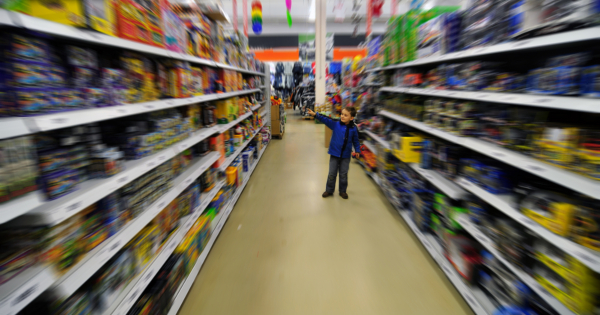
We’ve all been there, in the middle of the store, when suddenly our kid starts asking for a toy, then whining for a toy (any toy!) and hopefully doesn’t start screaming for a toy or I’m going to put this package of sour gummy worms right back on the shelf! Do not test me!!
 It isn’t even the five dollars we tell them that we don’t want to spend, it’s that we don’t want to feed their addiction to stuff. We don’t want to bring home another plastic toy that increases the burden on our suffering planet. Not even another wooden toy that used up plenty of fossil fuels to be manufactured and then shipped from goodness knows where. We don’t want to get home and watch them get bored with the toy they thought they had to have and then stop playing with it after twenty minutes. We don’t want this to become a lifelong addiction to needing more. We want them to be happy inside of themselves.
But, how to explain consumerism to a kid?
Kids haven’t been around as long. They haven’t seen the depth and breadth of the suffering that consumerism causes. When we explain that toys use resources and cause pollution and ecosystem loss, they laugh and run away. They haven’t been broken by the world and we don’t want to be the ones to break them. But they need to understand. We have to teach them.
When our son was 3-years-old, we figured out how to explain it to him in a way that had lasting impact. It all started with a book called China by Anita Ganeri. Our son is fascinated by China, he loves pandas and going to the China buffet. He’s fascinated by stories about the Great Wall. For whatever reason, this little Mexican-American kid thinks China is just the bees-knees. The thing about this book is that it has a whole section on pollution and how 90% of the world’s toys are made in China.
When I read that section to my little boy he got very quiet and I capitalized on that by explaining, “See?? That’s why we’re always telling you about how we need to buy less toys because every factory that’s built in China is one less place that the pandas have to live. Pandas are endangered because of all the resources that toys use and the habitat loss from factories and pollution.” Yes, it’s so much bigger than that, but this was something he loved even more than toys.
He loved pandas.
The next time we were in the store, he started whining about toys anyway. But this time I had a talking point that meant something to him and it made all the difference. “Remember about the pandas in China? We can still buy toys sometimes, but we have to remember the pandas.” He fought it, he still wanted that toy. But his fight had less sureness to it. I got down close and had a little talk to remind him how 90% of the toys come from that one country. The one country in the whole world where there are any pandas at all. Don’t you want to keep the pandas safe? He decided that he did.
Of course there’s more to teach about living sustainably, and kids are clever.
Some weeks later, after he’d puzzled it over, our son had a solution that meant he could keep his toys and the pandas would be safe. He told us that we should just build ONE factory in China and make ALL the toys just there. Then the pandas would still have room. We explained there was too much demand to make all the toys in just one factory and his face fell.
But then I told him the best thing would be to buy toys made from recycled materials by local artisans. Our son quickly declared that he could make toys out of things in the recycling bin. So we gave him a roll of tape and he went to work. He says when he grows up he’s going to be a toy maker. I told him he already is one.
Of course, there’s a slight drawback to this. Now instead of sending our garbage out with the recycling, he tapes it together in interesting configurations and won’t hear of throwing his inventions away and they end up cluttering up our whole house.
Next lesson was the difference between consumerism and materialism.
He needs to learn why we don’t need to keep every bottle cap and candy wrapper. I’m teaching him the philosophy of the Buddha and hoping that someday this will click for him. Always something new to learn! When I figure this puzzle out, I’ll let you know.
For now, find something your kid cares about that’s harmed by consumerism. Something they care about deeply. If you can find a book about how that thing is harmed then all the better. Somehow it’s more believable if it comes from a book and not just from the wild imagination of their parent. Hah!
—
What’s your take on what you just read? Comment below or write a response and submit to us your own point of view or reaction here at the red box, below, which links to our submissions portal.

◊♦◊
Get the best stories from The Good Men Project delivered straight to your inbox, here.
◊♦◊
Sign up for our Writing Prompts email to receive writing inspiration in your inbox twice per week.
—
Photo credit: Shutterstock


.