


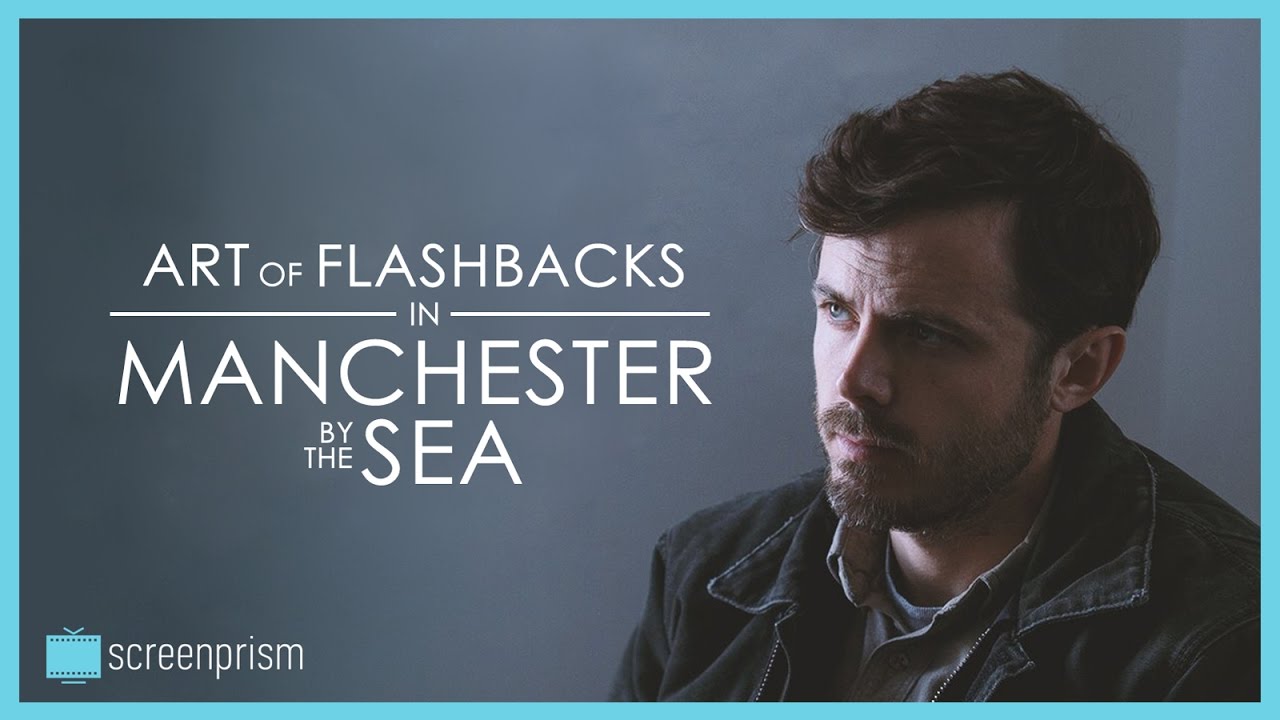
Kenneth Lonergan uses the Unannounced Flashback throughout Manchester by the Sea to tell the story of Lee Chandler (played by Casey Affleck) and express Chandler’s ongoing grief. We look back at the history of flashbacks to shed light on Lonergan’s choice.
.
.
Transcript provided by Youtube:
00:05
What’s the director trying to say when he abruptly jumps into flashbacks
00:10
without giving any hint that they’re coming?
00:12
Kenneth Lonergan’s Manchester by the Sea liberally uses these unannounced flashbacks
00:17
It opens with one – with Casey Affleck’s Lee Chandler and his nephew
00:21
the young Patrick engaging in playful banter on a boat
00:24
Back in the present when Lee takes the elevator down to see the body of his brother Joe
00:28
We flash back to the time when Joe was first diagnosed with a heart condition
00:32
By setting the two scenes in the same building but years apart
00:35
Lonergan makes us wonder for a moment if we’ve misunderstood to think that Joe’s died
00:40
Lee’s going down in the elevator and then he’s in a hospital room with the still alive Joe
00:44
Then we noticed that the doctor Dr. Bethany was referenced in the earlier scene
00:48
as being on maternity leave
00:50
And when we returned back to the elevator
00:53
we understand clearly that we’ve just seen a flashback
00:56
Later as Lee is faced with the prospect of becoming a guardian
01:00
“I can’t be his guardian”
01:02
We cut back and forth between this scene and the most crucial unannounced flashback
01:06
Giving us a window into the pain inside Lee’s mind
01:09
And explaining why he feels unequipped to father Patrick despite his evident love for the boy
01:14
All this brings us to the question: why does Lonergan keep us on our toes
01:18
by making us decipher where each scene fits in the timeline
01:21
To answer this question, it’s helpful to look back in film history
01:25
and see how flashbacks have been done in the past
01:27
how they’re usually done in the present
01:29
and the different roles they can play in a narrative
01:31
The director usually credited with first using flashbacks is D. W. Griffith
01:35
Griffith referred to them as “switchbacks”
01:37
But the flashback remained a rarely used technique in the 20s
01:41
audiences weren’t used to seeing flashbacks so they needed a long clumsy
01:45
or a natural explanation to understand what was going on
01:48
A writer in 1921 called the flashback a “murderous assault on the imagination”
01:53
By the late 30s and early 40s the flashback became less experimental
01:57
and more standard fare in Hollywood
01:59
William Wyler’s 1939 film Wuthering Heights, like the novel
02:03
is mostly told through flashbacks via Ellen the housekeeper
02:06
In 1941’s Citizen Kane, Orson Welles uses flashbacks creatively
02:10
framing Kane’s life retrospectively through different points of view
02:13
to reflect on the enigmatic protagonist
02:15
And in 1942, Michael Curtiz’s Casablanca seamlessly flashes back to Paris
02:21
to explain the lovers’ backstory without confusing his audience in the slightest
02:25
In all these classic cases, flashbacks don’t come out of the blue
02:29
In Wuthering Heights, the camera tracks out from the narrator
02:31
to introduce the story of Heathcliff and Cathy
02:34
In Citizen Kane the flashback begins with a sequence of a track in from behind
02:39
An extreme closeup of the words the reporter is reading
02:41
and a cross-dissolve to the childhood scene in the snow
02:44
In Casablanca, the camera tracks in on Rick as he sits alone
02:48
and the picture blurs before cross dissolving into his Paris memories
02:51
1944’s Double Indemnity, told through multiple flashbacks
02:55
focuses on a narrator talking into a dictaphone
02:58
and uses cross dissolves as the means of transition
03:00
1950’s Sunset Boulevard, told by a dead man in a pool
03:04
begins with a cross-dissolve as well
03:06
All of these examples use clear visual means to announce the flashback
03:09
and to bookend our journey back to the past
03:12
While a really obvious zoom or dissolve might look a Gimmicky in a flashback today
03:16
a lot of the visual announcement techniques in the 30s and 40s are still used today
03:21
in combination with some other developments
03:22
Bryan Singer’s The Usual Suspects in 1995 sticks to the old school in one scene
03:28
where the camera tracks in on Verbal
03:30
but it also goes with extreme close-ups, tinted and choppy sequences
03:34
and other techniques for the flashbacks that invariably follow Verbal’s narration
03:37
Just as if he were the noirish narrator of Double Indemnity or Sunset Boulevard
03:42
In the Bourne Identity, the flashback sequence literally flashes
03:46
cutting back and forth and also featuring jarring images
03:49
Pulp Fiction announces its non-linearity through title cards
03:52
So does 500 Days of Summer
03:55
Over time, film language has developed a variety of types of flashback
03:58
such as the testimonial or confessional flashback
04:03
the conversational flashback
04:13
The object-triggered flashback
04:16
The thought-triggered flashback
04:33
And the filmmaker-initiated flashback
04:36
Flashbacks can also have mixed or contradictory functions
04:39
The obvious function of many flashbacks is to provide exposition or backstory
04:43
but when the flashback only serves its purpose
04:45
it’s often regarded as lazy and unimaginative storytelling
05:02
Used more creatively it can serve as point of view, either of the protagonist
05:07
or of a variety of characters to show different sides of a story
05:10
or present competing views of a character or an event
05:13
Or flashbacks can also create the feeling of a puzzle
05:16
Forcing the audience to piece together moments like detectives solving a mystery
05:20
So that we’re invested in answering the deep questions of the story ourselves
05:25
Other films like Manchester choose to cut the effects and the middleman, namely the narrator
05:30
and go straight into flashbacks without announcing them
05:33
Alain Resnais’s 1959 film Hiroshima mon amour offers an early example
05:38
of using unannounced flashbacks to mimic flashes of memory
05:42
suggesting how vividly past feelings persist in the present
05:50
Woody Allen’s 1977 film Annie Hall flows freely between the past and present
05:55
Flashbacks can take place with no hint at all
05:58
as when Alvy reflecting on how he first met Annie
06:00
or with lines that lasts a split second
06:03
“You were very hot for Allison at first”
06:05
“Were you always funny?”
06:06
“We had that argument just last month, don’t you remember that day?”
06:09
As Alvy states at the beginning
06:11
“I keep sifting the pieces of the relationship through my mind
06:14
and pieces are exactly how Alvy remembers Annie
06:17
As he reflects on what went wrong, time becomes of little relevance
06:21
Alvy can’t get over in his memories
06:23
Lonergan’s flashbacks in Manchester give us total fluidity of time
06:27
to represent a character who is tortured and imprisoned by his past
06:31
Just as for Alvy or Elle, Lee’s memories intrude on his present
06:35
and shape his ongoing life
06:36
So to set them off as finished or behind him would be misleading
06:40
The past isn’t over for Lee
06:41
His past colors his present and makes life unbearable
06:45
The non-linearity mirrors the experience of grief
06:48
for a heart that will never be unbroken
06:59
Also far from being purely expositional
07:02
the flashbacks here are emotional
07:03
Each one presents an event of life-changing consequence to Lee
07:17
The flashback to Joe’s first diagnosis is the beginning of his loss of his beloved brother
07:22
which from that point on is certain and only a matter of time
07:25
The flashback to Lee’s great tragedy explains the thing that we can’t shake off
07:30
“I can’t beat it”
07:33
The reason he’s terrified to be Patrick’s guardian
07:38
and why he won’t involve himself in normal human interactions
07:41
The flashback to the happier days revolve around Joe’s boat
07:44
and joyful time spent on the water
07:46
In many films water tends to be a symbol for emotional states
07:50
and a coastal area or beach can represent the place
07:53
where our daily logical selves meet our emotional selves
07:56
When Lee looks out the window at the Manchester landscape and punches the window
08:00
He’s grappling with his painful past but he’s also
08:03
refusing to confront and accept his own emotions
08:05
He tells Randy “there’s nothing there”
08:16
Because he views himself as dead inside
08:19
like the frosty winter ground that is evidently too cold for Joe to be buried in
08:23
But the happy flashbacks reminding Lee of the life he wishes he could go back to
08:27
torture him the most
08:29
because while he would prefer to be dead inside
08:31
his emotions remain all too painfully strong
08:52
The film’s title and namesake, the town of Manchester by the Sea, Massachusetts
08:57
is Lee Chandler’s dream and nightmare
08:58
He led a happy life there until the unspeakable tragedy
09:01
from which point on he’s been fighting to leave it behind
09:04
Manchester is more than a place
09:06
To Lee, it’s romance, it’s fatherhood and all forms of human connection
09:10
None of which Lee now feels capable of sustaining
09:14
Like some other flashbacks mentioned before
09:16
Lonergan’s have an element of the puzzle or mystery too
09:19
As audiences work to stitch together Lee’s timeline
09:22
The central mystery we’re solving is the question of
09:24
whether Lee has really changed or can change
09:26
The non-linearity plays into this mystery because it highlights Lee’s own fear
09:31
that he can never again recover, connect or be responsible for another human being
09:35
“Do you want to be his guardian?”
09:40
But like the winter that thaws into spring at the end of the film
09:43
Lee returns to the boat with Patrick in a final scene which echoes the very first
09:47
The mirrored framing suggests that Lee is finally thawing too
09:50
If only in small limited steps like looking for extra bedrooms
09:54
so Patrick can stay with him overnight
09:56
“Yeah I was looking for one extra room”
09:58
He’s recognizing that some emotional life still exists in him
10:02
and no longer denying his deepest self or his potential to feel again
—
This post was previously published on Youtube.
—
***
If you believe in the work we are doing here at The Good Men Project and want to join our calls on a regular basis, please join us as a Premium Member, today.
All Premium Members get to view The Good Men Project with NO ADS.
Need more info? A complete list of benefits is here.
Talk to you soon.
—
Photo credit: Screenshot from video


.