


—
Communication is a tricky business. It is easy to assume that we are all speaking the same language, and that our labels, viewpoints, and judgments are all the same.
Sadly, we are all looking at the universe through our own individual key hole. We communicate in words, which are a shortcut at best.
A common myth is that the Inuit have a hundred words for snow. They don’t. But they could, and with some words, we all should. Just what does “stress” mean? Or “depression”? Or “love”?
We attach meaning to words based on our culture, experiences, and media consumption.
We can do this all day with words as diverse as “success” to “chair”. Just what does chair mean? Is it an armchair or an office chair? What colour is it? How comfortable? What is it made of? What size is it? So much information is missing.
Words are a terrible way to communicate, and so we need to think about how we say those words, and what our body language is contributing. It is often our ego filling in the meaning, and it doesn’t always match that which was intended.
Parents know this. Witnessing a child learn language, and somehow piece together what words may or may not mean, is taken for granted but should be awe inspiring.
We can assume that when a four year old speaks, they are seeing the same reality we are, and that the words mean the same. They don’t.
I have a four year old daughter, and many a tantrum has been circumvented by clear communication. If emotions are high, it is worth checking that the reasons are valid. What do they think is going on?
My daughter (Evie) stays most of the time with her mum, my ex-wife. They have a cat, which was mainly a house cat due to Evie’s mums breast cancer, chemotherapy, and poor immune system.
Once the chemotherapy stage was past, we started to open the back door and to give the cat, Bella (after Bellatrix from Harry Potter) the option to explore the outside world. It took a week or two, but eventually she crossed the threshold.
I pointed this out to Evie.
“Look Evie, Bella is outside!”
She burst into tears and started to wave whilst crying “bye Bella”.
She thought she was leaving for ever. She loves that cat.
For her, cats stayed indoors. Bella had never been outside. Leaving the house meant going away. Evie was distraught.
Communicating with a young child means pausing the hustle and bustle of life. Being mindful. Communicating with and open mind, body, and will.
Their view of the world is not the same as yours, and you are responsible for that view. So take a moment and try to work out where the confusion is.
Another example was in a supermarket. We needed to buy more dresses, so her mum held one up and asked if Evie liked it.
“No”
So we held up three different ones.
“No. Put them back”
She started to cry and get upset.
Did she hate the design? The colour? The lack of, or presence, of pockets?
Thankfully we were having a good day, and could deploy some patience and empathy. We dropped to her eye line. We used calm voices and cuddles. We communicated effectively. We got to the route of the problem.
She had not set out to cause us stress. This was not personal. Our egos were not right in assuming her intention.
She thought we meant taking off her dress and putting on another one.
She loved the dress she was wearing. She was happy. Why would we change that?
So we tried to frame it in a way she understood. That she was wearing her Monday dress (it was Monday) and this new one could be for Tuesday, and this other one for Wednesday, and the last one for Thursday.
She calmed right down. Picked the ones she liked. Told us to put them in the basket and take them to the counter.
We could have got angry. Annoyed that a four year old was being a fashion diva, that she always had a tantrum in shops, that this was our life now.
Or we connect. Try to see the world through her viewpoint. To use the language she understood. To solve the problem, not fight a battle.
Our language can become machine gun fire, loud, scattered, with unintentional collateral damage. Or it can be a sniper rifle. Succinct and to the point.
Language matters far more than we think. If we can take in to account someone else’s perspective, we might just be able to avoid that conflict from a toddler, a keyboard warrior, or someone in person.
—
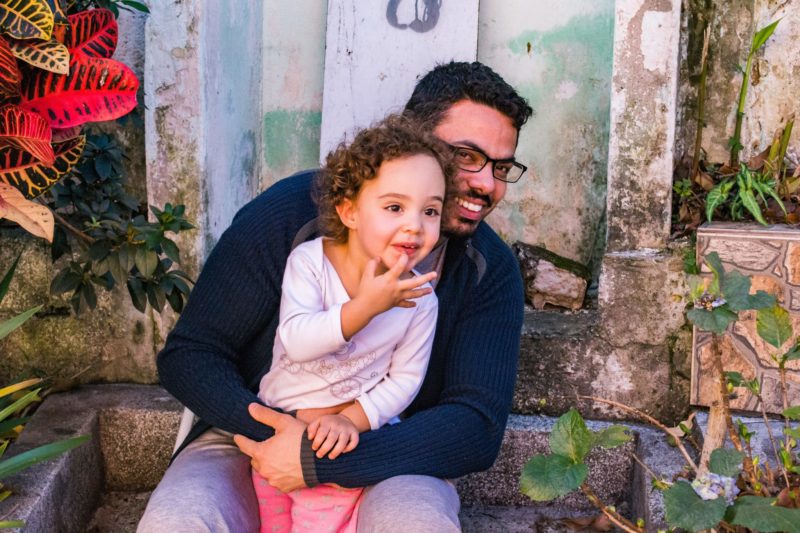
Photo by Jonas Kakaroto on Unsplash


.