


—
By Lou Del Bello
If you are unable to listen to this audio, please update your browser or go here to download[6.4MB]
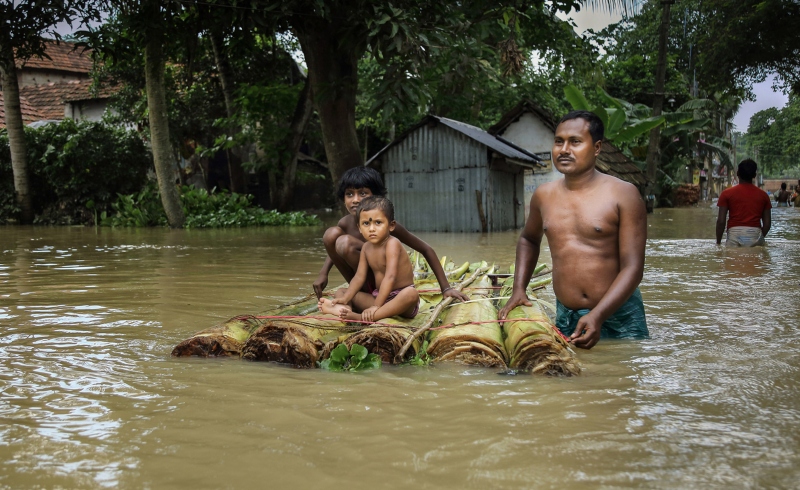
Floods and drought are often two sides of the same coin. In certain places, they damage soil, water systems and ecosystems in repeating cycles that exacerbate each other’s impact.

South Asia is one example of such a place. During the dry season, any rain passes straight through what are often degraded soils, leaving crops to wither in the sun. Instead, farmers, firms and factories rely on wells that tap underground reservoirs. But this resource is quickly depleted because most monsoon rainfall runs uncontrollably off the land, without replenishing the underlying water.
When flooding occurs, it is traditional to divert water away from inundated floodplains to protect people and reduce damage to homes, farms, businesses and infrastructure. But by then, it is often already too late — and the following year the story will repeat itself.
To combat this, hydrogeologist Paul Pavelic worked with his team at the International Water Management Institute to design and trial a new system that protects communities in flood-prone areas before disaster strikes. In this interview, he talks about the concept and reveals early results from testing the technology in the north Indian state of Uttar Pradesh.
This article was originally published on SciDev.Net. Read the original article.
—
***

If you believe in the work we are doing here at The Good Men Project and want to join our calls on a regular basis, please join us as a Premium Member, today.
All Premium Members get to view The Good Men Project with NO ADS.
Need more info? A complete list of benefits is here.
Talk to you soon.
—
Photo credit: iStockphoto.com


.